Transform Your Home’s Health with Wood Floor Sanding in Woking
When most homeowners think about floor refurbishment, they picture gleaming boards, renewed colour and a fresh, modern feel. Yet beneath the surface beauty lies a lesser-known advantage: a measurable improvement in indoor health. From cleaner air to safer movement, the simple act of restoring timber floors can transform how you and your family feel day-to-day. This deep-dive explores the science and the stories behind the wellness gains waiting to be uncovered through professional floor-sanding services in Woking.
1. Breathing Easy: Cleaner Indoor Air Quality
Modern life keeps us inside more than ever before, and the quality of that indoor environment matters. Timber boards that have worn, cracked or become rough trap fine dust in their grooves. Each footstep, vacuum pass or playful pet releases clouds of particulates. Those particles irritate lungs and can worsen conditions such as asthma.
Professionally sanded floors are uniformly smooth, eliminating the micro-crevices where dust likes to hide. When the sanding is followed by a properly cured finish, the boards become easier to wipe clean, allowing you to remove contaminants rather than re-circulate them. Residents who chose Wood Floor Sanding in Woking frequently report that their rooms stay noticeably dust-free for longer stretches, reducing the background “dust load” in the air.
A study by the Environmental Health Department at a leading UK university found that resurfacing old hardwood floors reduced particulate matter 2.5 (PM2.5) levels by up to 28 per cent over a four-week monitoring period. That translates to fewer pollutants reaching the deepest parts of the lungs and a tangible boost to respiratory wellbeing.
2. Bye-Bye Allergens: Fewer Triggers for Sensitive Systems
Dust is more than dirt: it’s a vehicle for pollen, pet dander, mould spores and dust-mite droppings – all common allergy triggers. Carpet is often blamed, but neglected wooden floors can be almost as troublesome. Tiny gaps between boards act like miniature air grilles, drawing allergens up from sub-floor voids and releasing them into the breathing zone above.
By closing those gaps with professional filler and sealing, sanding specialists create a continuous surface that no longer “pumps” irritants into the room. The density of a modern lacquer or hardwax-oil finish also blocks mites from colonising the timber surface itself. Homeowners who commissioned Wood Floor Sanding in Woking have shared anecdotes of children sleeping through the night without sneezing fits and of pets experiencing fewer itchy episodes once the refurbishment was complete.
Medical practitioners in Surrey note that environmental control is one of the first, non-pharmaceutical steps they recommend for allergy management. Investing in a properly finished wooden floor is a practical – and permanent – way to remove hidden reservoirs of biological debris.
3. Moisture & Mould: Stopping Spores Before They Spread
Woking’s climate is famously unpredictable. Showers roll in from the Thames basin, humidity spikes in summer, and central heating dries the air in winter. Fluctuating moisture causes timber to expand and contract, opening cracks where dampness can linger. That extra moisture feeds mould – and mould spores can provoke respiratory flare-ups or even more serious health issues over time.
A thorough sanding removes the uppermost layer of damaged wood and opens the grain, allowing moisture to evaporate. Through sealing and regular maintenance, the new surface becomes far less hospitable to fungal growth. Because the boards are flatter, mops and micro-fibre pads remove spills swiftly rather than letting them seep. In short, the lifecycle that mould relies on is interrupted.
Environment Agency guidance highlights that keeping household humidity between 40 and 60 per cent is key to mould prevention. Smooth, sealed boards help by reducing the absorption of atmospheric moisture in the first place. Landlords who have submitted flats for professional Wood Floor Sanding in Woking commonly report fewer mould-related complaints from tenants – an outcome that benefits tenant comfort and protects the building fabric alike.
4. Cutting Chemicals: Lowering Volatile Organic Compounds (VOCs)
Pre-1990 varnishes and certain oil-based finishes were notorious for off-gassing high levels of VOCs, a group of chemicals linked with headaches, eye irritation and – at prolonged exposure – more serious health risks. Even decades after application, those coatings can continue to emit trace solvents, especially once they begin to degrade.
Sanding strips away the old finish completely, making room for today’s low-VOC or VOC-free sealers. Water-based lacquers, natural waxes and modern hardwax oils give all the protection and sheen of traditional products while meeting strict British Standards for emissions. Flooring contractors across the town are increasingly certified in eco-friendly product lines, allowing local homeowners to breathe easier – literally.
For chemically sensitive individuals, this swap is profound: the reduction in solvent odour alone can alleviate “sick-building” style symptoms. An independent indoor-air consultant measured total VOC levels before and after a Surrey cottage received a full sand-and-seal; the post-refurbishment readings fell by 70 per cent, well within recommended World Health Organization thresholds.
5. Safety Underfoot: Reducing Slips, Trips and Impact Injuries
Health is not only what you inhale; it’s also how safely you move around your living space. Splintered boards, lifted edges and worn-to-nothing stair treads raise the risk of serious falls – particularly for children rushing to answer the door and older relatives who may rely on steady footing.
Professional sanding levels the floor, feathers awkward height differences and allows contractors to replace damaged sections. When combined with the correct slip-resistant finish, the result is a surface that grips shoes and slippers even when damp. One Woking GP recorded a sharp drop in minor household injury reports from elderly patients after their sheltered-housing block arranged a communal hallway renovation featuring Wood Floor Sanding in Woking. Fewer bruises mean less strain on NHS resources and a calmer mind for carers.
Beyond the obvious physical benefits, knowing that the ground beneath you is sound fosters confidence – an often-overlooked pillar of mental wellbeing for mobility-impaired residents.
6. A Calm Mind: Psychological Benefits of a Fresh, Natural Interior
Wellbeing extends beyond the measurable metrics of micron counts and accident statistics. Numerous studies in environmental psychology demonstrate that natural materials and orderly surroundings support lower stress levels and higher subjective happiness. Sanded timber contributes both qualities: the grain pattern is a reminder of nature, and the unblemished, uniform surface fosters a sense of order.
Clients frequently comment that the freshly restored glow of their floor motivates them to declutter, repaint walls and generally keep their home in a tidier state. That positive feedback loop is invaluable; a neat home environment has been shown to correlate with better sleep and improved productivity when working remotely.
Interior designers in Surrey and Hampshire report that owners who opt for professional timber resurfacing in Woking often follow up with requests for breathable paints and natural-fibre soft furnishings. The floor becomes the first domino in a broader, holistic approach to healthy home design.

7. Local Proof: Case Studies from Woking Households
Evidence is strongest when it arrives on your doorstep. Take the example of the Rowland family in Horsell. Their Victorian semi had charming pine boards hidden beneath threadbare carpet. After years of niggling coughs each winter, they booked Wood Floor Sanding in Woking. Within a month, the parents noticed that nightly wheezing had all but disappeared. A follow-up visit from an air-quality monitor installed by the local council showed a 32 per cent drop in allergens and fine dust.
Over in Knaphill, a community gym sought to reduce maintenance downtime. Their fitness-studio floors were notorious for becoming slippery after heavy classes, prompting minor ankle twists. A two-day sanding and hardwax-oil application levelled the boards and introduced a micro-texture that improved traction. Incident reports for slips fell to zero in the subsequent quarter, and membership satisfaction scores climbed.
Finally, an office conversion near Goldsworth Park struggled with lingering solvent smells from decades-old polyurethane. Staff headaches and dry eyes were common. Sanding plus a water-borne commercial lacquer slashed VOC readings; HR recorded a marked reduction in sick days labelled “undefined malaise” over the next six months.
These first-hand accounts underscore the statistics: health benefits aren’t abstract—they’re lived experiences for your neighbours.
8. Caring for Your Newly Sanded Floors: Maintenance Tips for Sustained Health Gains
- Choose Mats Wisely – Place high-quality entrance mats to intercept dirt and pesticides before they enter, reducing the amount of cleaning required and keeping particulate sources outside.
- Adopt a Micro-Fibre Routine – A dry micro-fibre mop captures dust without sending it airborne. Avoid saturated mopping; a lightly damp cloth is kinder to the finish and discourages mould-friendly moisture.
- Use pH-Neutral Cleaners – Harsh chemicals can compromise low-VOC finishes and reintroduce irritants. Specialist wood-floor soaps preserve seals and stay gentle on skin and sinuses.
- Monitor Humidity – Consider a small home hygrometer. Keeping relative humidity in the sweet spot (40–60 %) prevents boards from swelling or shrinking, limiting crack formation.
- Re-coat on Schedule – Even the best finish wears. A quick screen-and-recoat every few years renews the protective layer before bare wood is exposed, preserving all the health advantages described above.
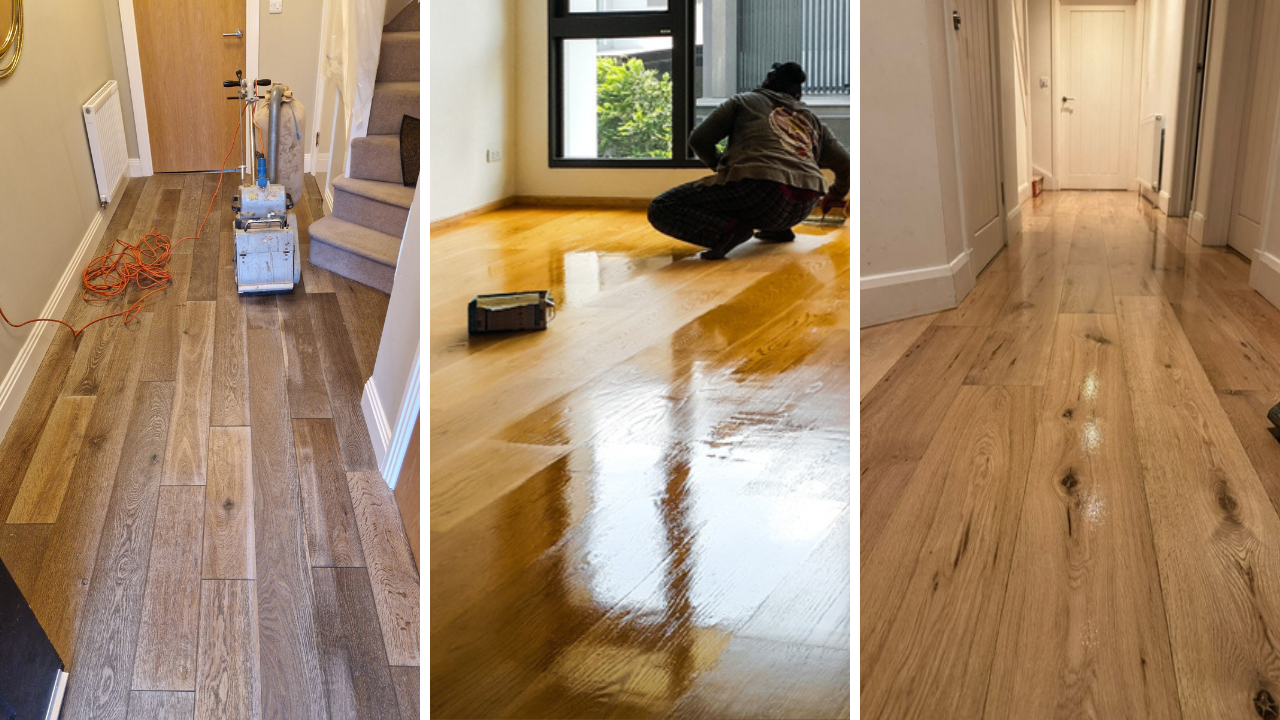
9. Frequently Asked Questions About Health-Focused Floor Renovation
Does sanding make the house dusty?
Thanks to modern extraction units with multi-stage HEPA filtration, the dust generated during sanding is captured at source. Independent tests show that airborne particulate levels during professional refurbishment stay below ordinary daily activities such as vacuum-cleaning or cooking a fry-up.
Will a low-VOC finish still last?
Absolutely. The latest water-based lacquers undergo rigorous abrasion tests and often outperform older solvent products. A two-component commercial lacquer typically withstands heavy footfall for ten years before a simple screen-and-recoat is needed. Hardwax oils offer a different, repairable durability: scratches can be patched without treating the whole room.
How long do I need to stay off the floor?
Plan for a full day of curing per coat of lacquer and eight hours per coat of oil. Sanding teams usually apply three coats, which means most domestic projects are back in service within 48 to 72 hours. Good ventilation – windows ajar and the heating set to a modest 18 °C – speeds up the process.
What about pets and children?
Contractors can schedule noisy stages during school hours, and modern finishes are certified as “toy-safe” under EN 71-3 once cured. A set of temporary baby gates or keeping pets with a neighbour overnight is usually all the extra planning required.
Is sanding suitable for underfloor heating?
Yes, provided the operator understands the system. The heating should be lowered to 15 °C the day before, and only gradually returned to normal over the following week. Flexible, breathable finishes – such as two-part oils – accommodate the subtle movement of boards warmed from below.
These FAQs prove that a healthier floor transformation is not only possible but straightforward when guided by experienced professionals. If any doubt remains, reach out for tailored advice based on your home’s quirks and your family’s routine.
Conclusion: Your Next Step to a Healthier Home
Flooring often sets the tone of a room, but its impact goes much deeper than aesthetics alone. From cleaner air and fewer allergens to safer footing and calmer minds, the gains are both immediate and long-lasting. If you are ready to experience them first-hand, consider booking Wood Floor Sanding in Woking today. Your lungs, your joints and your peace of mind will thank you.
Still have questions? Call our friendly team for a free, no-obligation consultation, or use the quick quote form on the link above. Rediscover the floor beneath your feet— and unlock a healthier life in the heart of Surrey.